

TL;DR A day trade is opened and closed in the same session, usually read on a short timeframe such as the 10-minute chart. A swing trade is held for days or weeks and is usually read on the 1-hour and daily charts. Rip uses the same EMA Cloud method on both; the timeframe and the session rules change. Account rules for frequent intraday trading also differ from holding overnight.
What each style means
A day trade opens and closes in the same trading session. You do not intend to hold it overnight. The work happens during market hours, and the result is known by the close.
A swing trade is held for more than one session, often several days and sometimes a few weeks. You have to accept that news, earnings or a gap can move the position while you are away from the screen.
A third, longer category is investing, covered in investing vs trading. A swing that you refuse to exit is not an investment. It is a trade without an exit rule.
How Rip reads each one
The method is the same. The timeframe changes.
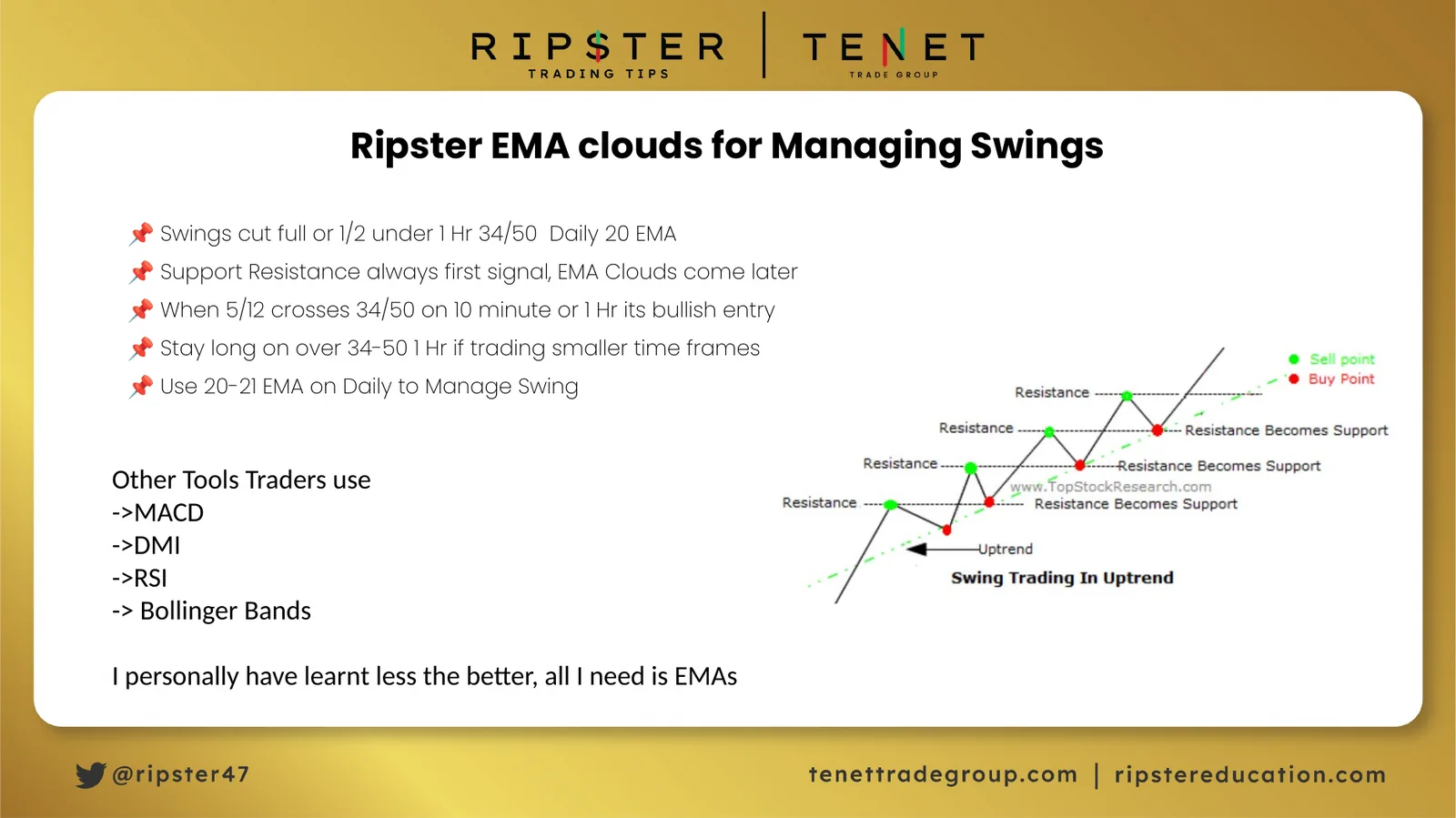
For day trades, Rip’s teaching is to read the 10-minute chart, with the 5-12 and 34-50 clouds doing most of the work. The first minutes of the session are often noisy. His 10 AM Trend Time idea is that the market usually shows, between 10:00 and 10:30 ET, whether the day is more like a trend day or a chop day. That read changes how much you should be trading, not just which ticker looks active.
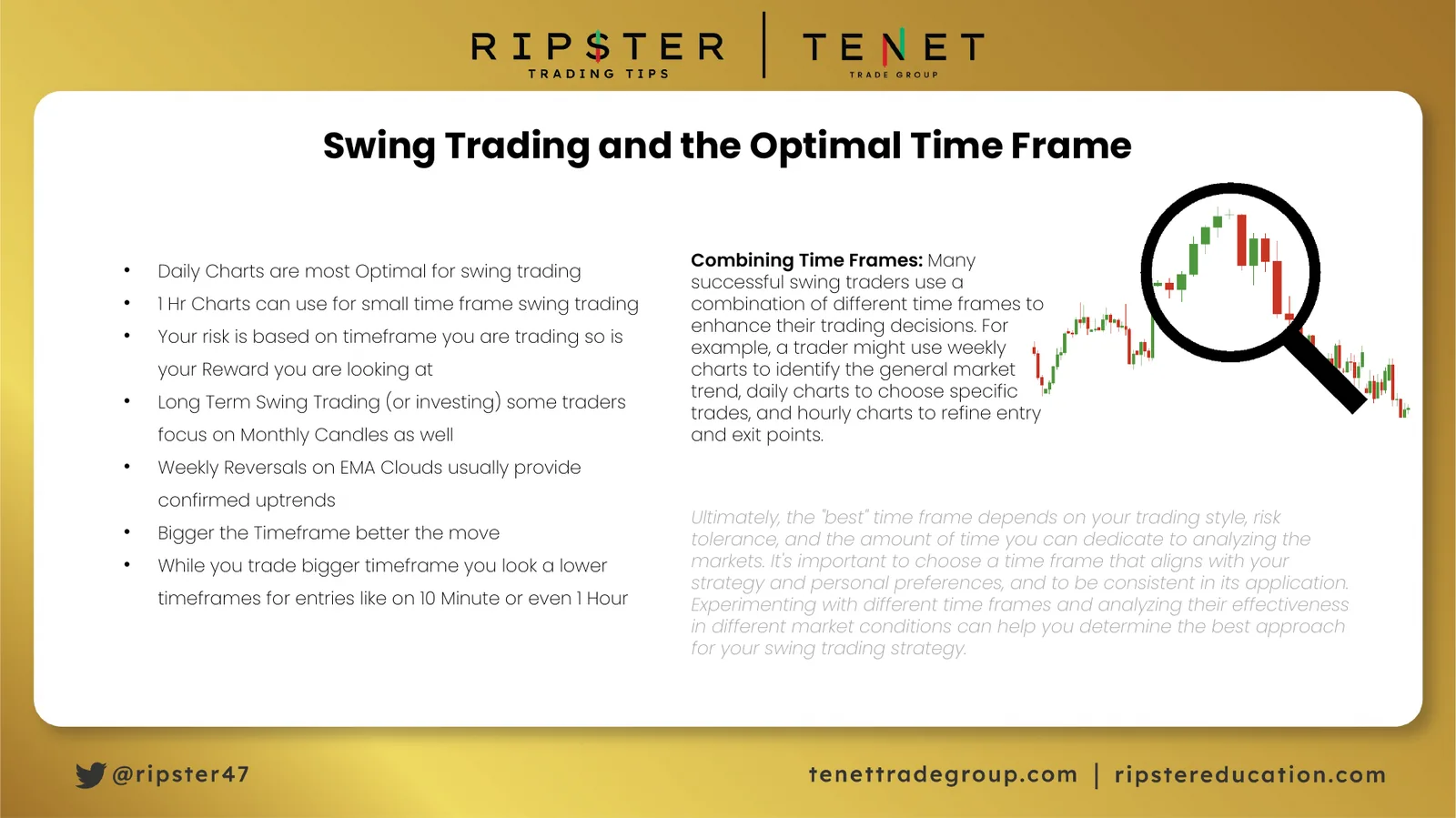
For swings, the 1-hour and daily charts lead. A daily cloud still in trend is a different environment from a 10-minute chart that has already flipped twice before lunch. Multi-timeframe reading is covered in timeframes and in the MTF Clouds lesson.
The full comparison, with how the clouds are used on each style, is in Swing Trading vs Day Trading. Use this Basics page to get the definitions straight; use that lesson to see the method.
Risk and account rules change with the style
Intraday concentration. Day trading can produce several decisions in a morning. That is where overtrading, revenge trades and sloppy size usually appear. A written cap on trades and a fixed R, explained in risk management, matter more, not less, when you are active.
Overnight gaps. A swing trader can be right on the daily trend and still be moved through a stop at the open. Gaps are part of the style. Position size has to live with that, and some traders use options with their own rules; see Ripster’s options trading rules rather than improvising.
Account type. Frequent buying and selling in a margin account used to be governed by the pattern day trader rule and a $25,000 minimum. FINRA replaced those day-trading margin requirements with new intraday margin standards, effective June 4, 2026, with a phase-in for firms through October 20, 2027. There is no longer a FINRA-wide $25,000 pattern day trader test once a firm has moved to the new rule, but brokers can still apply the old standard during the transition and can set stricter house rules. Details, and what still applies in a cash account under T+1 settlement, are in how much money you need to start.
Always confirm the current policy with your own broker. This is education, not an instruction to day trade, swing trade, or use margin.
From Rip’s swing webinars
The same idea, from Rip’s December 2023 Secrets of Swing Trading webinar and the more detailed Swing Trading vs Day Trading lesson: day trades are managed on a short timeframe; swings are managed on the 1-hour and daily charts.
Choosing a starting style
Start with the style that matches the time you actually have, and with a market you can follow without forcing trades.
If you can sit the open and the first two hours, day trading is at least practical as a study. If you have a full-time job and can review charts in the evening, swings are the more honest fit. You can learn both over time. You should not run both at full size on day one.
In either case, learn to read trend and to define risk first. A style is not a strategy. The strategy on this site is the Ripster Cloud process: trade with the trend, define the stop, and review the work in a journal.
Common questions
Which style does Rip use?
Both. Day trades are typically executed on the 10-minute chart. Swings are planned on the 1-hour and daily charts. The same clouds are read on each timeframe.
Do I need $25,000 to day trade?
Not as a blanket FINRA rule anymore. In June 2026 FINRA replaced the old pattern day trader $25,000 minimum with intraday margin standards. Brokers may still be phasing in the change through October 20, 2027, and many firms set their own limits. Read the starting-capital lesson and confirm the current policy with your broker.
Is one style safer?
Neither is automatically safer. Day trading concentrates risk into a short window and can lead to overtrading. Swing trading carries overnight and weekend gap risk. Size, a stop and a written plan matter more than the label.
Ripster lessons on this topic
Once the idea is clear, these are the matching lessons from Rip's method.
- Swing Trading vs Day Trading with the Ripster Clouds
- Amateur Move vs Trend Move: Trading the Open
- Ripster EMA Clouds: The Complete Guide
When you want to go further

Learn the method live with our team: voice and screen share, the morning game plan and a webinar library.
Visit Tenet Trade Group ↗ TENET RESEARCHResearch for swing traders and investors: curated lists, stock pages with Ripster EMA Clouds, and model portfolios.
See Tenet Research ↗Education only. Members learn to execute for themselves.
Sources: Ripster Education swing vs day trading lesson; FINRA Regulatory Notice 26-10 and FINRA, Understanding the New Intraday Margin Requirements (April 20, 2026).
Education only, not financial advice. Trading involves risk, including loss of principal. This is not a recommendation to buy or sell any security. Confirm current account rules with your broker.