

Trading tips from Rip, free.
Every topic from the original Trading Tips menu, rewritten from Rip's own posts and webinars. No sign-up needed.
Newbie Tips: Start Here
Open →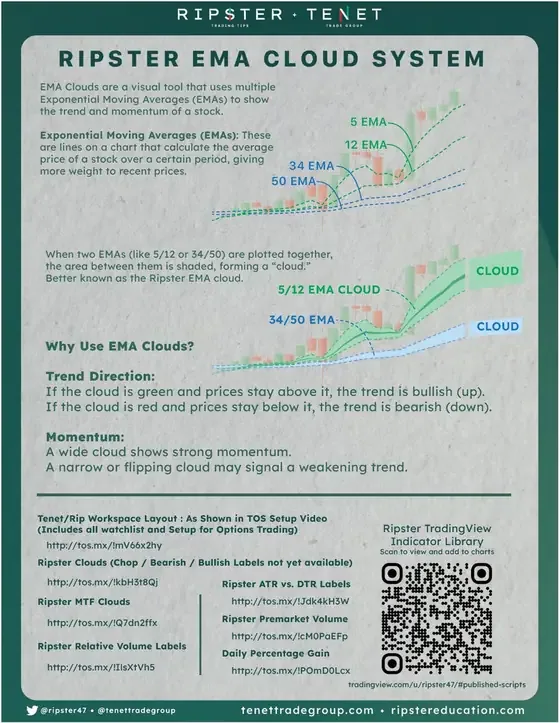
Ripster Clouds Explained
What the Ripster EMA Clouds are, how the 5-12, 8-9, 34-50 and 72-89 clouds work, the timeframes for day and swing trading, and the golden rule.
Open →TA Concepts
Plain-English definitions of the technical analysis terms new traders need: accumulation, breadth, breakouts, traps, support, resistance and trend.
Open →Trading Resources
Ripster's list of websites for stock research: earnings and economic calendars, pre-market movers, IPOs, SEC filings, sectors and short interest.
Open →
Newbie Tips
Ripster's start for new traders: clean charts, 100 charts of practice, one repeatable system, a fixed R and 50 small trades before scaling.
Open →Trading Flash Cards
Free flash card sets: patterns, setups, rules and psychology, a few cards a day.
Open →Cheat Sheets
Open →Options Basics
Open →Ripster Option Rules
Ripster's rules for trading options: skip the first 10 minutes, strike selection, spreads and liquidity, sizing to risk, cutting losers, never averaging down.
Open →Unusual Option Flow
What unusual options activity is, how to read a flow order (sentiment, expiry, strike, premium, volume vs open interest), sweeps and blocks.
Open →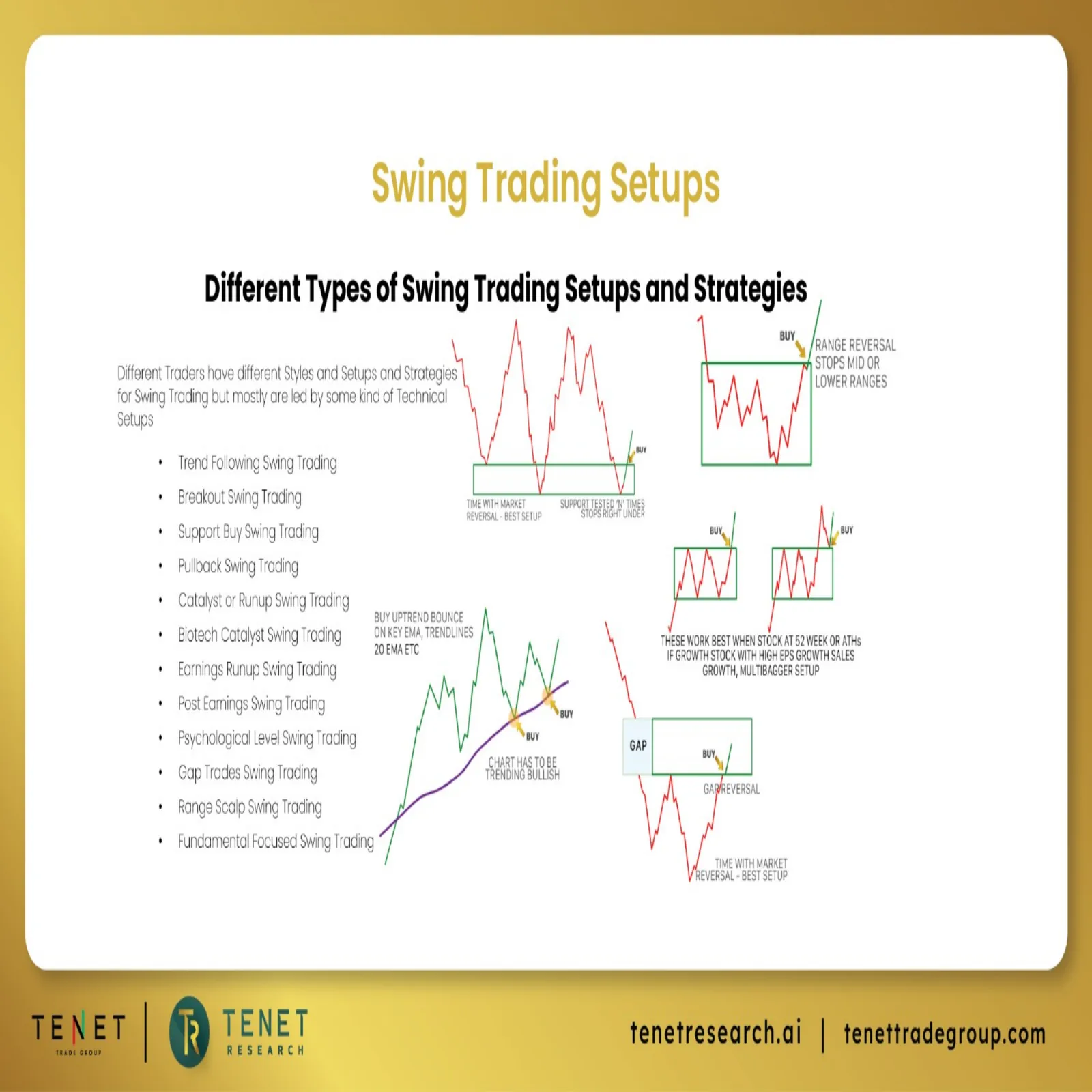
Swing Setups
Ripster's six swing systems: dip buys at support, daily and weekly breakouts, trend pullbacks, reversals, gap fills and post-earnings gaps.
Open →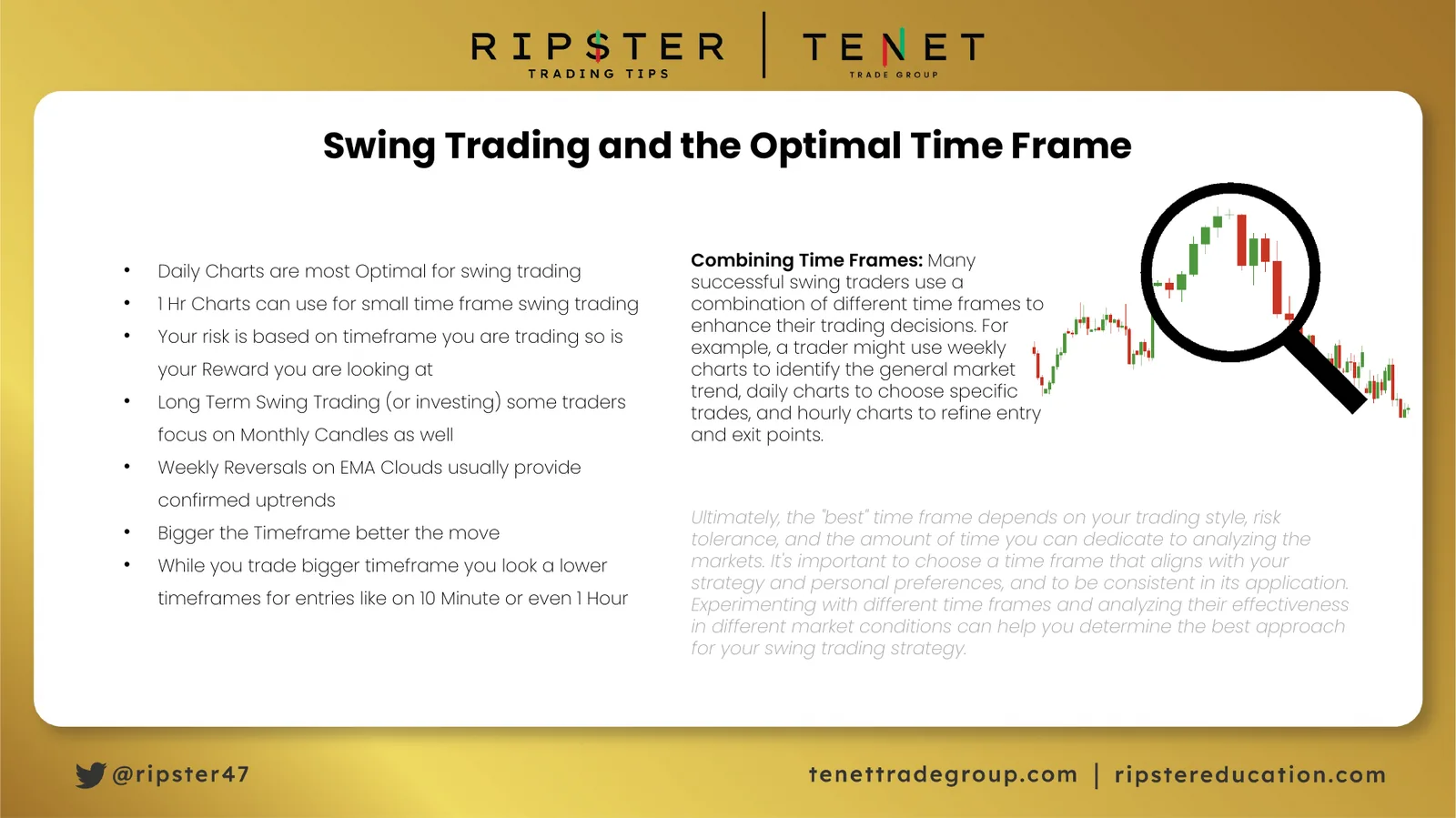
Swing Trading vs Day Trading
How Rip uses the Ripster EMA Clouds for day trades on the 10-minute chart and swing trades on the 1-hour and daily, with the risk rules for each.
Open →
Risk Reward
Ripster's first rule: lose a fixed amount (R) when wrong, aim for 2R or 3R when right, and let the chart level set the stop and the size.
Open →Trading Styles
The trading styles Ripster lists, from low-float momentum to large-cap day trading, swings, options, IPOs, growth and value investing, and how to pick one.
Open →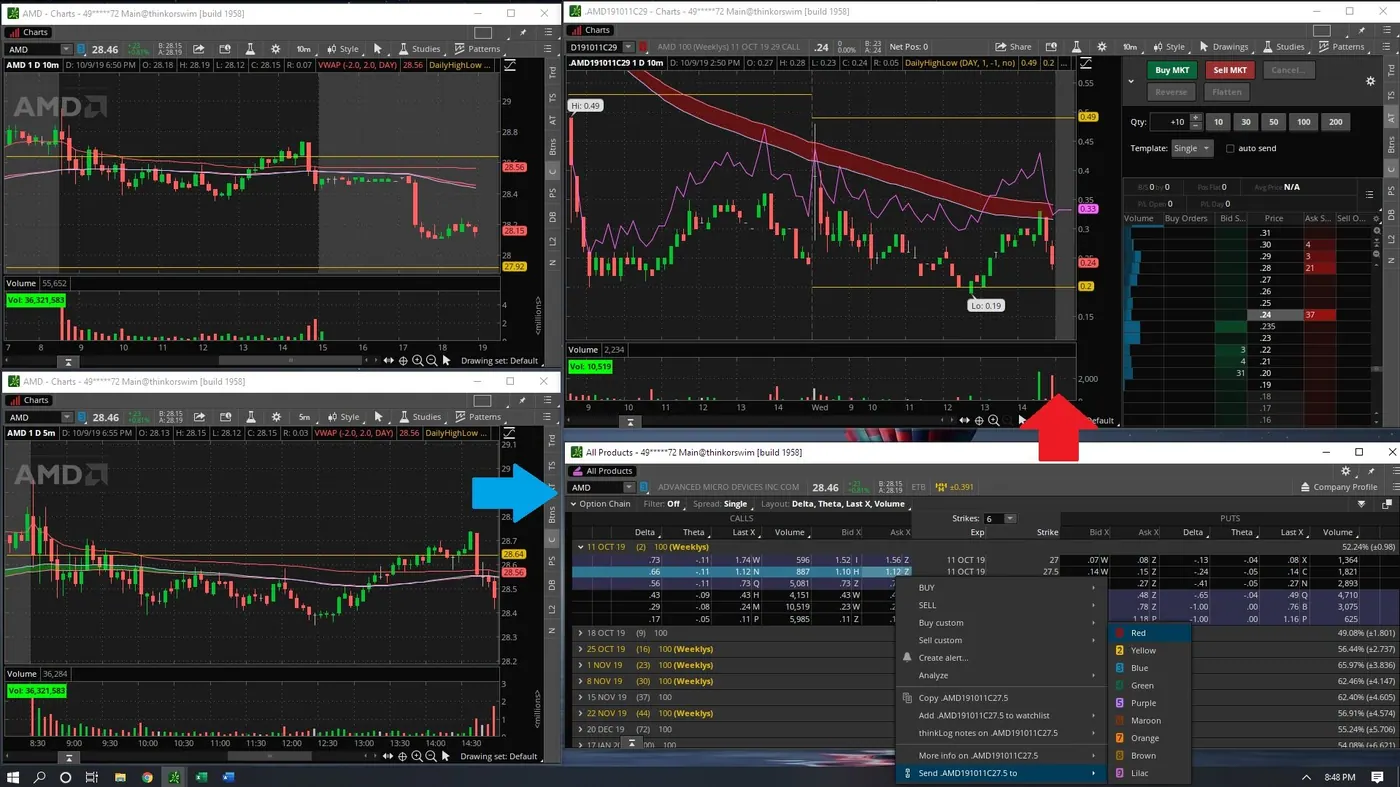
ThinkorSwim Tips
Ripster's ThinkorSwim tips: linked stock and option charts, option time and sales, free news, watchlists, relative volume and a pre-market scanner.
Open →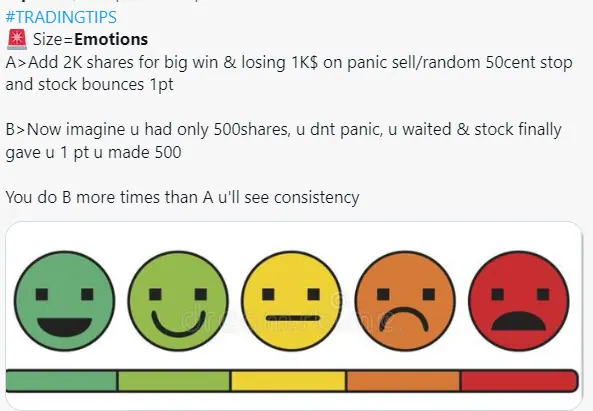
Control Emotions
Ripster's Emotions Tracker for daily trading, why size is an emotion, and the habits that keep fear, greed and FOMO out of your execution.
Open →Stock Offerings & Impact
What a secondary offering is, dilutive vs non-dilutive offerings, how market cap and sector change the impact, and why biotech is different.
Open →Chop vs Trend
Ripster's six signs of a trend day vs a chop day: 10 AM Trend Time, pre-market and prior-day levels, index participation and the EMA clouds.
Open →Journal & Track
How Ripster built his trading journal: log setups, trades, recaps and screenshots, and keep your biggest losses where you can see them.
Open →Position Sizing with R
How to size from your fixed risk (R): shares equal risk divided by stop distance, sizing options by delta, and why a tight stop means more size.
Open →4 Pillars of Trading
The four pillars Ripster teaches for trading: Setups, Risk, System and Goals, and how they fit together into a complete trading plan.
Open →Chart Patterns
The chart patterns Ripster teaches: triangles, rising and falling wedges, bull and bear flags, flat bases, retests and the resistance magnet.
Open →Amateur Move vs Trend Move
Why the first candle is not the trend: how Ripster separates the amateur move at the open from the trend move after 9:45 to 10 AM ET.
Open →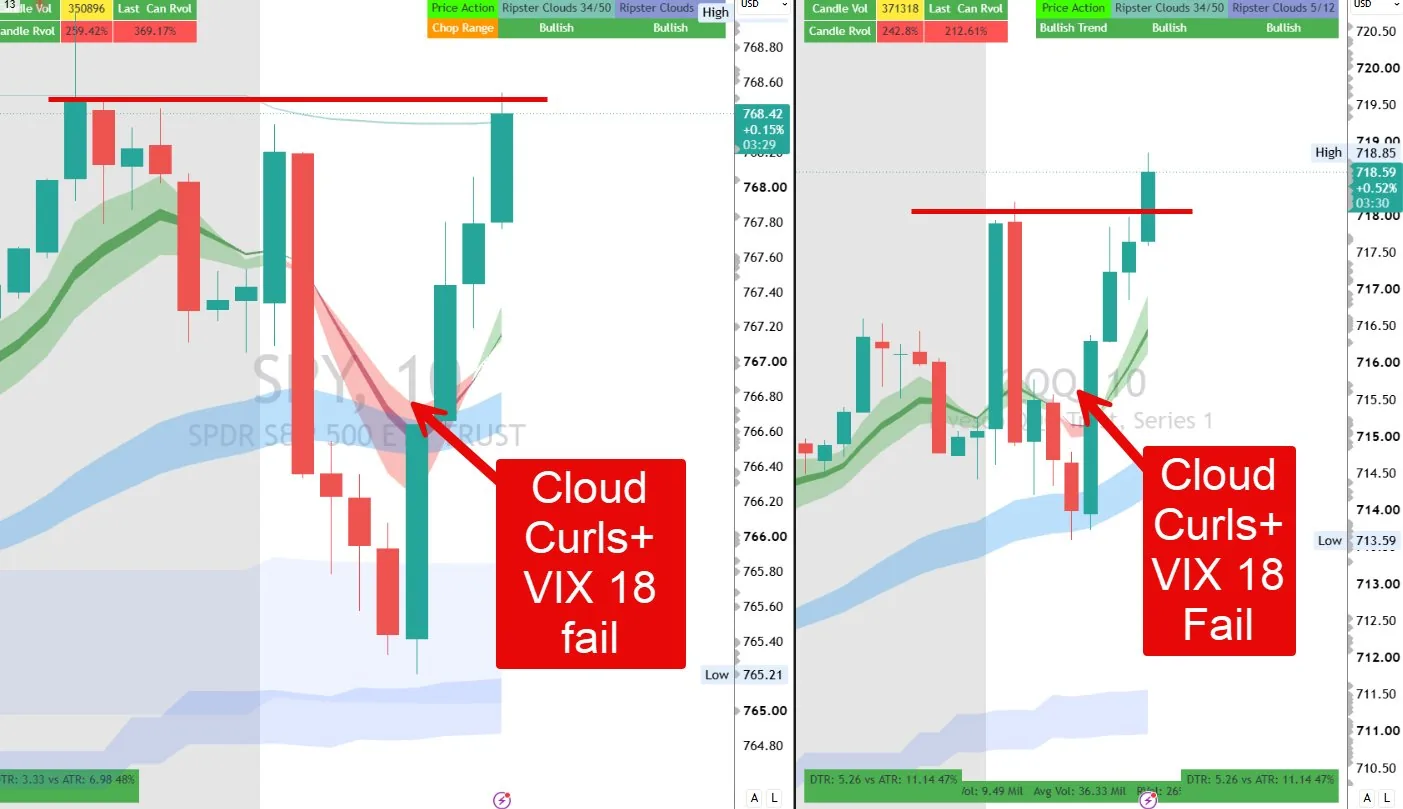
10:40 Algo Time
Ripster's 10:40 Algo Time is a recurring window around 10:40 to 10:50 AM ET when the morning move in SPY, QQQ and related indices often changes character. It is a time to pay attention, not a buy or sell signal: he reads it with VIX and the Ripster EMA Clouds.
Open →Earnings: 2nd-Day Plays
Ripster's post-earnings rules: the 2nd-day long and short, why charts at highs and lows behave differently into earnings, and overhead supply.
Open →Trading Psychology
Ripster on trading psychology: losses as tuition, FOMO, revenge trading, bias, confirmation-seeking, the 30-minute rule and the habits of successful traders.
Open →Repeatable Setups & Sessions
Rip's list of repeatable setups for the morning, midday, close, swings and next day, plus the reference levels he checks every session.
Open →ATR & Relative Volume
How Rip uses ATR and relative volume to judge how far a stock can move, when to be careful with breakouts, where to scale out and how to size.
Open →Market Internals & Yields
How to track the broad market: the dollar, yields, VIX and index ETFs, advances vs declines, Level 2 on intraday shorts, and Treasury auctions.
Open →Options Gamma & GEX
Why heavy open interest can pin or push price near expiry, how dealer delta hedging works, and how to read SPX gamma exposure (GEX), the gamma flip, and call and put walls.
Open →MOC Imbalance
What market-on-close (MOC) orders and late-session imbalances are, when they are published, and how Rip uses them as context — not as a repeatable setup.
Open →Leveraged ETFs
When leveraged ETFs can stand in for options, the main long and short leveraged pairs for indexes, sectors and mega caps, and the risks of holding them.
Open →Study a few cards every day.
Rip's flash cards turn these lessons into quick daily reviews: patterns, rules, setups and psychology. Nine sets, free to browse.